From Lead Scoring to Outreach: Building an AI Sales Engine

How Smart Companies Are Replacing Manual Funnels with Intelligent Revenue Systems

APRIL 2026 EDITION

Sales teams have spent two decades stuffing data into CRMs and calling it discipline. The result, too often, is a polished mess: thousands of records, vague scores, slow follow-up, and reps burning prime hours on prospects who were never going to buy. McKinsey's recent work on growth agents points to a sharper model. Not more dashboards. An actual AI sales engine that watches behavior, ranks opportunity, drafts outreach, triggers follow-up, and hands the right conversations to humans at the right moment.

That shift matters because speed now shapes revenue. Companies using AI-driven lead scoring are seeing 30% to 50% gains in sales productivity, while organizations that let AI agents handle early outreach and qualification are cutting sales cycles by roughly 23%. Those aren't cosmetic improvements. That's pipeline math changing in plain sight.

"If qualified leads hear back in under two hours instead of two days, you don't just improve efficiency. You change who buys from you."

Why the AI Sales Engine Is Replacing the Old Funnel

The old funnel assumed buyers moved in tidy stages and sales teams could keep up with manual judgment. They can't. A modern buying journey is jumpy, fragmented, and full of signals that arrive in bursts: a product page visit at 6:12 a.m., a pricing-sheet download after lunch, a quiet LinkedIn view from a VP two days later, then silence. Human reps miss patterns like that. Models don't.

What's different now is agentic behavior. Earlier systems waited for prompts. Newer AI agents can monitor intent data, update lead scores in real time, queue personalized outreach, recommend next-best actions, and escalate edge cases without a manager hovering over every move. That's why 64% of enterprise sales organizations have already implemented or are piloting AI-driven lead scoring. The market isn't testing a novelty anymore. It's redesigning the machine room.

And here's the uncomfortable truth: most revenue leaks happen before a rep ever gets on a call. Slow response times. Generic sequences. Leads routed to the wrong territory. SDRs chasing accounts with weak fit because the form looked promising. AI closes those gaps best when it works as an operating layer, not a side tool.

The Role Shift

Great reps aren't being turned into button-pushers; they're being relieved of low-yield drudgery. The strongest teams now act more like orchestrators. They review signals, pressure-test AI recommendations, intervene in complex negotiations, and spend their energy where nuance still wins the day. Relationship building, objection handling, deal strategy. The human work gets more human.

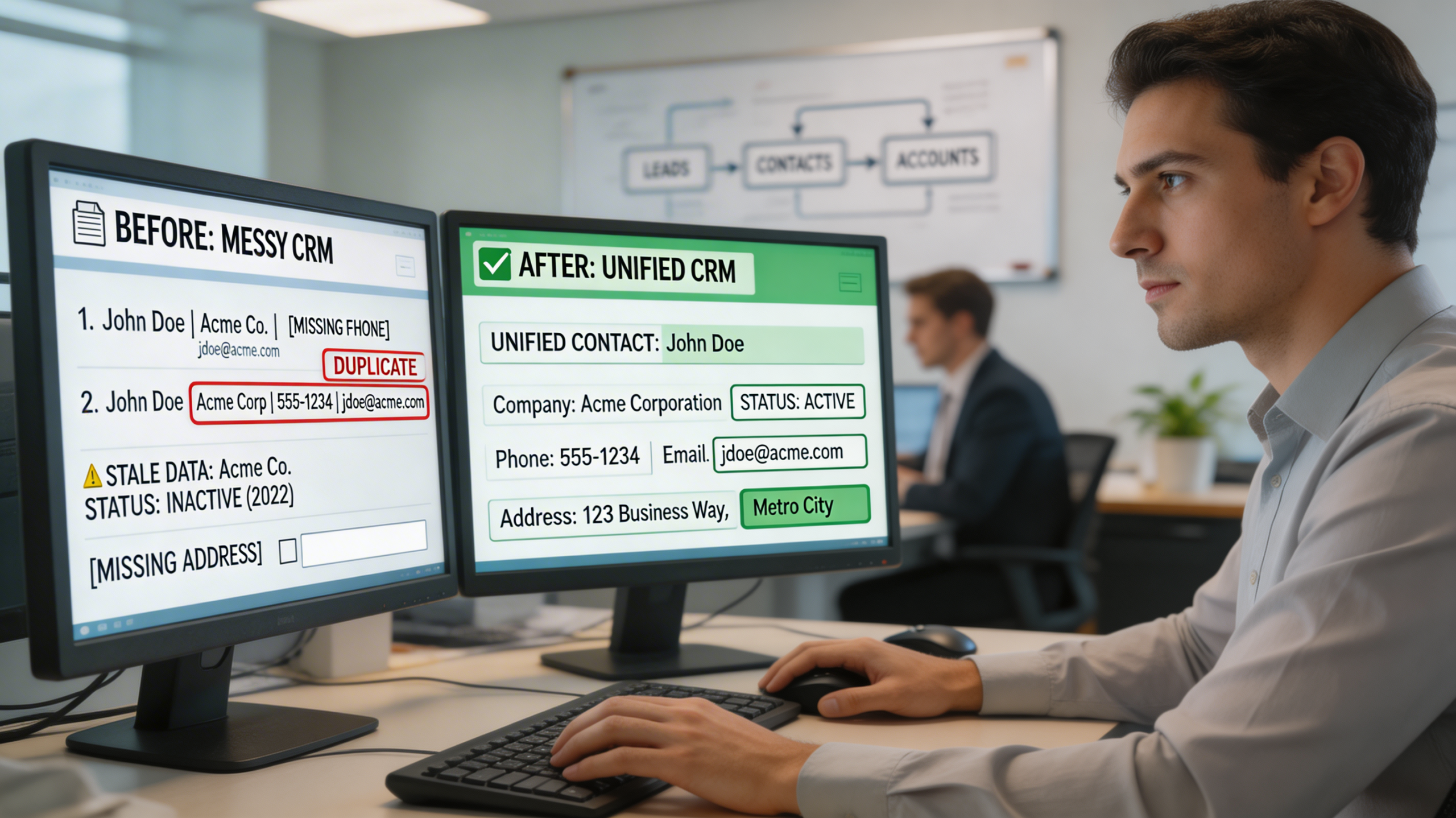
Revenue operations specialist cleaning CRM data and unifying records before automation, a strong visual for marketing automation and content marketing

Fix the Data Layer Before You Automate Anything

Every executive wants the outreach magic. Fine. But the hard truth sits underneath it: a sales engine is only as smart as the data feeding it. McKinsey's framework gets this exactly right. Clean, integrated data is the prerequisite, not the reward. If your CRM is riddled with duplicates, stale job titles, broken field logic, and disconnected product usage data, the model won't become visionary. It'll become confidently wrong.

The strongest systems pull from more than firmographics and demo forms. They ingest behavioral signals across the full customer journey: website activity, content downloads, email engagement, meeting history, support tickets, product telemetry, billing patterns, win-loss notes, and channel engagement.

"A pricing-page visit after reading three comparison articles is a louder buying signal than a job title alone."

For many companies, the real breakthrough comes when marketing and sales stop arguing over lead ownership and start sharing evidence. Social media marketing can surface warm audiences and topic affinity; sales conversations can feed the model with objections and urgency cues; lifecycle data can reveal whether high-scoring leads actually stick around after the contract is signed.

Essential Data Sources

  • Firmographic fit: industry, company size, geography, tech stack, growth stage
  • Behavioral intent: high-value page visits, return frequency, webinar attendance, pricing interactions
  • Engagement quality: reply depth, meeting acceptance, demo no-show rates, asset consumption
  • Commercial history: open opportunities, prior losses, expansion potential, retention risk
  • Operational friction: territory routing delays, duplicate ownership, bad contact data, compliance flags

Data Governance Warning

Data governance sounds dull until it saves you from a very expensive mistake. If your scoring model quietly downgrades certain industries, geographies, or company sizes because of biased historic outcomes, you can lock in bad assumptions at scale. Audit scoring rules. Review training data. Document why a lead was ranked the way it was.

Design the Workflow: From Lead Scoring to Outreach

Once the data spine is sound, the workflow has to be brutally clear. Too many companies automate fragments and call it transformation. They score leads in one platform, enrich them in another, draft emails somewhere else, then force reps to glue the whole thing together with Slack messages and tribal memory. That's not an engine. That's a relay race run in heavy boots.

A better design starts with real-time scoring. The model should recalculate as new signals land, weighting fit, timing, behavior, and momentum. Top-scoring leads get fast-lane treatment: immediate routing, AI-generated account briefs, suggested talk tracks, and personalized outbound sequences. Mid-tier leads enter nurture tracks with lighter-touch marketing automation. Low-fit records are suppressed, recycled, or sent to broad education streams instead of wasting SDR capacity.

The Practical Workflow

  1. Capture signals continuously from CRM, website, product, ad platforms, and communications tools.
  2. Score accounts and contacts in real time, then compare current behavior against historic conversion patterns.
  3. Route by priority, territory, and account rules so hot leads never sit in a queue overnight.
  4. Generate personalized outreach sequences across email, phone preparation, and selected social touches.
  5. Escalate to a human when the lead replies, requests pricing, shows multi-stakeholder activity, or triggers a compliance exception.
  6. Feed outcomes back into the model so scoring and messaging keep getting sharper instead of merely busier.
"When this works, the top 20% of AI-scored leads can convert at three to four times the rate of traditionally scored leads."

The handoff matters just as much as the message. Sales reps should receive more than a scored lead. They need a concise briefing: why this account surged, which assets were consumed, what objections similar accounts raised, which stakeholders appear active, and what first-call angle is most likely to land.

Ten Revenue Plays Worth Testing Now

If you're building an AI sales engine in 2026, don't stop at lead scoring and email drafts. The latest value is broader, messier, and much more interesting. Here are ten hot topics smart operators are testing right now, across operations, pipeline management, and go-to-market execution.

1. Autonomous inbound triage

Let AI agents qualify demo requests, route by urgency, and book meetings instantly. The win isn't just speed. It's preventing high-intent demand from cooling off while someone checks a queue after lunch.

2. Account-based signal clustering

Move beyond individual leads. Aggregate behavior across an account so five medium signals from different stakeholders trigger a stronger response than one flashy click from a junior contact.

3. Dynamic outbound personalization

Use generative systems to draft first touches based on role, sector pressure, competitor mentions, earnings calls, hiring trends, and product fit. Then constrain tone, compliance language, and brand claims with clear rules.

4. AI research briefs for reps before every call

Give sellers a one-page digest with recent company news, likely pain points, installed tech, prior interactions, and suggested discovery questions. Reps sound prepared because, for once, they're.

5. Next-best-action engines

Instead of dumping alerts on the team, rank the single most valuable action per account: call now, send pricing, involve an executive sponsor, pause and nurture, or re-engage with a different persona.

Real Results

A mid-market SaaS firm improved lead quality by 52% within six months after combining AI lead scoring with automated outreach inside Salesforce. A financial services company scaled outreach across 12 markets without adding headcount, lifted response rates from 8% to 19%, and more than doubled meeting-booking rates from respondents.

The finish line isn't a fully automated sales department humming away without people. That's fantasy, and usually bad fantasy. The real goal is a revenue system where machines handle pattern recognition and repetitive action, while people step in for judgment, trust, negotiation, and the subtle reading of a room that no model has truly mastered. Build that, and the gains spill outward: tighter pipeline hygiene, stronger conversion, smarter hiring, cleaner reporting, and a team that spends more time selling than shuffling data from one field to another.