2025 Trend Watch

Multimodal AI for Shoppable Video, Live Commerce, Social

COMMERCE TECHNOLOGY • 2025

The center of gravity in e-commerce has shifted. Not to a new channel, but to a new interface: multimodal AI that can see the product, hear the question, parse the intent, and transact in real time. What used to be a slick video overlay is now the orchestration layer for discovery, consideration, and purchase. And the timing isn't accidental—hardware, models, and operational readiness finally caught up with the promise.

By mid-2025, shoppable video and live commerce are no longer side experiments. They're line items with revenue targets, staffed teams, and rigorous governance. Retailers talk about "revenue per minute" on live streams the way TV planners used to talk about GRPs. Platforms court brands with low-latency pipelines and measurement that doesn't insult the CFO. The headline twist: multimodal AI isn't just helping creators sell; it's turning every live moment into a storefront that answers back.

"Multimodal AI isn't just helping creators sell; it's turning every live moment into a storefront that answers back."

Let's be blunt: the winners aren't the flashiest creators or the cheapest CPMs. They're the operators who wire product data into the model, enforce disclosure and safety, and instrument the last mile from stream to fulfillment. That's where the compounding gains hide.
Why Multimodal Now

From Novelty to the New UI for Commerce

Three converging threads forced the shift. First, large multimodal models (LMMs) matured: systems in the 100–500B parameter range with cross-attention and retrieval modules can recognize products on screen, ground answers in a catalog, and explain trade-offs without hallucinating their way into a return label. Second, the infrastructure got fast. Hybrid on-device and edge inference stacks hit sub-300ms end-to-end for visual detection plus language response, which means a viewer can say "Show the medium in navy" and get an answer before the moment dies. Third, brands ran the numbers in 2024—then bet bigger in 2025.

Market sizing tells the story. Live commerce sits roughly in the $450–$520 billion GMV band globally and is tracking toward the trillion-dollar line by 2027 on ~30% CAGR. Shoppable video ad budgets alone are nearing the $35–45 billion zone this year. Not hype—budget. When ads migrate to performance hooks inside creator streams, the CFOs follow the lift curves.

Performance Metrics That Matter

Pilots reported 20–400% conversion lifts over static product pages depending on category and funnel maturity, with 50–80% uplift a routine band for fashion, beauty, and consumer electronics cohorts. Dwell time climbs 30–60% when the stream answers questions in real time.

Performance is stubbornly persuasive. Pilots reported 20–400% conversion lifts over static product pages depending on category and funnel maturity, with 50–80% uplift a routine band for fashion, beauty, and consumer electronics cohorts. Dwell time climbs 30–60% when the stream answers questions in real time and pins context-aware cards. Revenue per minute? 1.5–3x in top-tier executions. The metric that changes behaviors: conversion-per-minute. It punishes dead air.

Behavioral data rounds it out. Six in ten younger shoppers say they're more likely to buy when the purchase button stays on-screen and the AI can respond to a quick voice prompt. Nearly a third of viewers used voice commands at least once within a session—higher on smart TVs and in markets where voice recognition is trusted. The living room is finally shoppable without the second-screen shuffle.

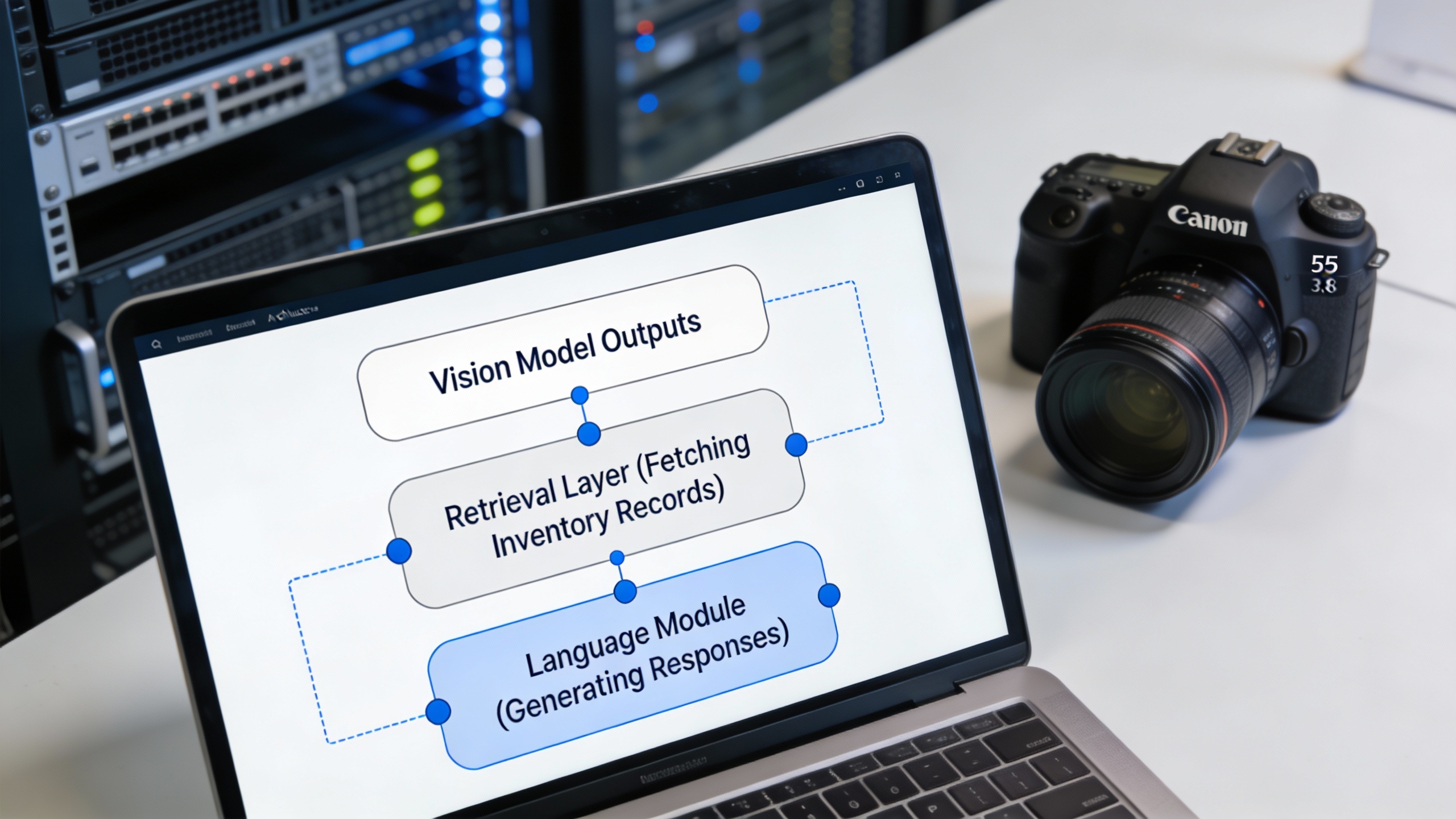
Overhead shot of a laptop showing a multimodal stack diagram linking vision, retrieval, and language modules for digital marketing automation

The Multimodal Stack That Sells

How It Works

Strip away the buzz and you'll see a fairly brutal architecture. Vision models identify objects, brands, and attributes in the scene—ideally grounded to a product graph rather than a vague label. A retrieval layer fetches structured data (inventory, price, size run, compliance notes), while a language model stitches the narrative and interacts with the viewer. Voice ASR and TTS bookend the loop. The orchestration layer decides what to surface—cards, coupons, add-to-cart prompts—based on engagement signals, margin rules, and probability of purchase.

The tricky piece isn't the model. It's the data contract. If your PIM, DAM, and inventory systems aren't in sync, your AI Agents will cheerfully offer the size that sold out yesterday. The serious teams use product-grounded RAG: the model can't recommend what the graph doesn't confirm. And every explanation needs provenance—imagery, spec table, or ingredient sheet—so when a viewer asks, "Is that jacket water-resistant or waterproof?" the answer cites the exact line item in the catalog.

"Sub-300ms is the muscle memory threshold; over 500ms, interruptions stack and conversions slide."

Latency matters. Sub-300ms is the muscle memory threshold; over 500ms, interruptions stack and conversions slide. That pushes compute to the edge and, increasingly, to devices. Expect hybrid routes: detection on-device, reasoning at the edge, policy checks in the cloud. Platforms that cracked this—often with NVIDIA or Qualcomm acceleration—now sell not features but outcomes: higher revenue-per-minute, lower cart abandonment, fewer returns for demo-rich categories.

Moderation exploded in scope once streams became interactive. You're no longer scanning for prohibited content alone; you're also policing deceptive claims generated on the fly, deepfaked endorsements, and counterfeit cues in product visuals. Live AI calls for live guardrails: on-stream disclaimers, watermarking for AI-generated overlays, and disclosure artifacts passed through the ad stack. Fail here and the regulatory bill arrives fast.

Playbooks That Convert: From Studios to Streets

Winning teams think like broadcasters and behave like operations managers. They plan the narrative arc—launch, demo, objection handling, social proof, urgency—but wire it into automation. The Automated Content Studio model—script libraries, B-roll, AR try-ons, and dynamic cards—can compress prep from days to hours. During this, AI Business Automation routes each viewer question to an agent: sizing, materials, shipping, returns, care. When those agents are trained on your catalog and policies, AOV rises without torching trust.

Let's talk channels. TikTok Shop isn't just a traffic hose; it's a marketplace with rules and a recommendation engine that rewards retention spikes. Amazon Live behaves like QVC for the app generation, but with better attribution. Instagram blends short-form discovery with post-purchase inspiration. And smart TV ecosystems—Samsung in particular—are carving out the big-screen storefront, where voice-first inputs shine and credit cards are already bound to the device. The strategy isn't either/or. It's a network where each surface plays to its strengths.

Content Format Strategy

Short bursts with tappable cards are perfect for impulse-friendly SKUs; long-form live streams suit higher-consideration items where demos matter. Use huddles with creators to build credible narratives—then hand the heavy lifting to the multimodal stack.

Content format is the crucible. Short bursts with tappable cards are perfect for impulse-friendly SKUs; long-form live streams suit higher-consideration items where demos matter. Use huddles with creators to build credible narratives—then hand the heavy lifting to the multimodal stack. The AI doesn't replace the host's personality; it handles the chorus of questions without breaking the flow. That's the secret to keeping both vibe and velocity.

Measurement must evolve. Track conversion-per-minute, revenue-per-minute, assisted conversion via AI prompts, and inventory availability-adjusted conversion (yes, stockouts skew your data). Attribute voice interactions: a "show me alternatives under $100" query that leads to a basket deserves credit. And audit the model: answer accuracy rate, hallucination rate, moderation interventions, and time-to-first-response. If the model glares at a tough question and stalls, the bounce will sting.

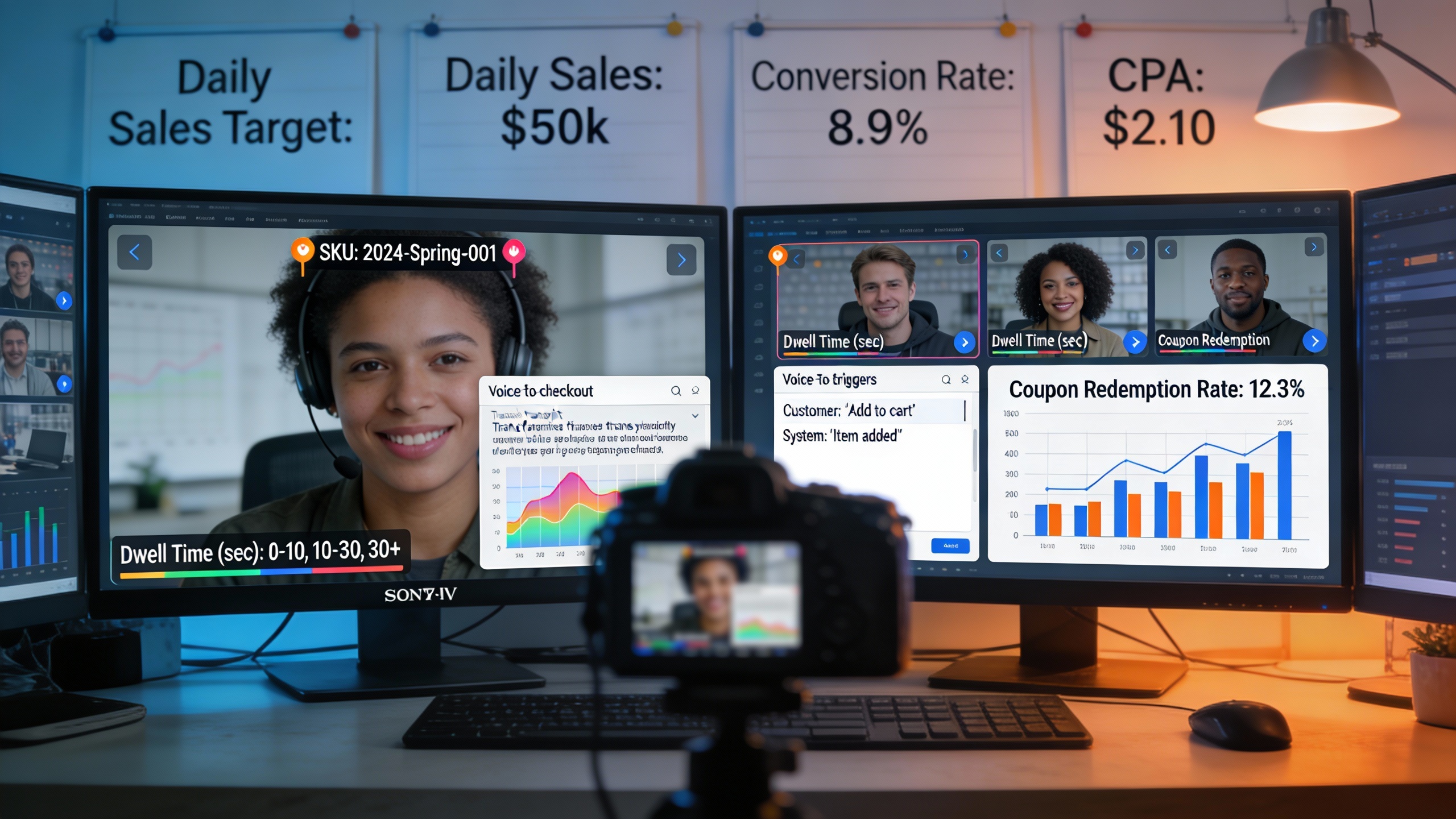
Performance ops dashboard showing SKU pinning, dwell heatmaps and voice-driven checkout metrics highlighting AI Business Automation and digital marketing automation

Revenue Levers: Ten Hot Topics for 2025 Ops-to-Marketing Teams

1) Real-time vision-to-cart

Auto-detect products on screen and pin SKUs with live price and inventory. Tie to coupons that trigger on dwell time thresholds. Expect measurable boosts in revenue-per-minute.

2) Voice-driven checkout

Let viewers say, "Add the medium, navy, pick-up tomorrow." Works best on smart TVs and in markets with high ASR accuracy. Reduces tap friction and recovers distracted buyers.

3) Multimodal RAG with product grounding

Ground every response in your product graph. Link explanations to specs, reviews, and warranty pages. Reduces returns and increases trust during high-velocity moments.

4) Dynamic offer optimization

AI Agents adjust bundles, discounts, or financing in the stream based on margin, inventory, and propensity scores. Protects contribution profit while nudging AOV.

5) Creator co-pilots

On-screen assistants feed hosts real-time prompts: "Top question: is it machine-washable." Keeps momentum and ensures objections are handled before viewers drift.

"The winners aren't the flashiest creators or the cheapest CPMs. They're the operators who wire product data into the model."

6) Safety-by-design pipelines

Inline disclosure, watermarking, and claim verification against your compliance database. Less sexy than AR try-ons, more critical to staying out of trouble.

7) Multilingual, code-switched streams

Automatic dubbing and subtitles tuned to dialect and slang. Reach expands without spinning up parallel productions.

8) Returns-aware recommendations

Blend fit feedback, historical return tags, and demo confidence scores to steer buyers to variants that stick. Margin improves quietly.

9) Edge inference for pop-up retail

Portable rigs for events: scan, demo, transact even on flaky networks. Think festivals, sports arenas, or in-store events where bandwidth comes and goes.

10) Post-stream retargeting with session memory

Follow up with clips that address questions the viewer asked, not just generic ads. Consent-first, with clear opt-outs. Feels helpful, not creepy—if you do it right.

Field Notes: Case Studies, Hard Lessons, Better Plays

Taobao Live set the bar when it fused creator energy with data discipline. Product auto-tagging based on real-time vision reduced taps to checkout; tying incentives to verified attribution kept creators honest and motivated. The exportable lesson for Western brands: your catalog isn't a spreadsheet—it's the grounding truth your model must obey.

TikTok's multimodal pilots nudged the West closer to China's maturity curve. Object recognition triggered contextual cards; creators could call up variants via voice, and conversational checkout trimmed cognitive load. Result: 30–150% conversion lifts in select categories. But a caution: lift tapered when inventory sync lagged by even a minute during flash spikes. You can't automate your way out of bad stock data.

Sephora's Premium Approach

Sephora took the premium path: AR try-ons plus live demos, stitched together with assistants that quote ingredient lists, contraindications, and shade-matching cues. Higher LTV followed among users who tried multimodal features.

Ultimately, the living room. Samsung and OTT partners showed that shoppable overlays during live sports and special broadcasts can move product without yanking viewers from the moment. Voice matters here; so does ruthless latency tuning. When the commentator says "limited edition" and your overlay lags, you lose the spike.

Governance, Risk, and the Boring Stuff That Saves Your Quarter

When streams are interactive and AI-assisted, regulators and consumer advocates pay attention. Disclose sponsored content clearly. Watermark generated overlays. Archive claims, sources, and offer terms. Run counter-counterfeit checks against your own catalog images to avoid unintentional endorsement of fakes. And monitor returns: multimodal discovery curbs misbuys in visibly demonstrable categories, but aggressive upsell agents can raise return rates if they overshoot. Tune for contribution profit, not only raw conversion.

Moderation isn't just content triage; it's commerce policy enforcement. Your agents should know what they can't say—no medical claims, no hidden fees, no scarcity games without proof. Policy-as-code is the only scalable approach. And yes, put a human on the kill switch for high-velocity events.

Privacy? Treat session memory as a privilege. Capture only what you need, encrypt transit and rest, log access, and respect regional consent laws. If you plan post-stream retargeting that references a viewer's live question, ask for explicit permission. Earning trust is slower than losing it. So is rebuilding it.

Sponsor Logo

This article was sponsored by Aimee, your 24-7 AI Assistant. Call her now at 888.503.9924 as ask her what AI can do for your business.

About the Author

Joe Machado

Joe Machado is an AI Strategist and Co-Founder of EZWAI, where he helps businesses identify and implement AI-powered solutions that enhance efficiency, improve customer experiences, and drive profitability. A lifelong innovator, Joe has pioneered transformative technologies ranging from the world’s first paperless mortgage processing system to advanced context-aware AI agents. Visit ezwai.com today to get your Free AI Opportunities Survey.